


Olympiacos helped Remo Freuler with schools, banking and paperwork — and his comments reveal an important part of modern recruitment


Transfer windows are measured in players. Clubs experience them in logistics. Remo Freuler's latest comments from Switzerland provide an unusual glimpse into that distinction. The 34-year-old midfielder has spent barely six weeks as an Olympiacos player, but when Swiss reporters asked him about his new life in Greece, one aspect of the experience stood out. Organization.
Freuler described Olympiacos' handling of his arrival as “fantastic”, explaining that the club assisted with everything from schooling for his children to banking and administrative registration. For supporters, those details can sound peripheral. For recruitment departments, they are anything but.
A transfer does not end when the contract is signed
Olympiacos announced Freuler on August 17 after the Swiss international completed three seasons with Bologna. The sporting logic was straightforward. Experience. Tactical intelligence. More than 300 Serie A appearances. Premier League football with Nottingham Forest. European experience. Almost 100 appearances for Switzerland.
Olympiacos knew what sort of midfielder they were acquiring but acquiring the footballer also meant relocating a 34-year-old father and his family from Italy to Greece. The club, he explained, dealt with practical requirements surrounding the move: his children's school, banking arrangements and the registration processes accompanying relocation.
Those tasks do not produce highlight videos. They can still affect what eventually happens on the pitch.
Settled families can mean settled footballers
Elite players are exceptionally well compensated, but they are not insulated from ordinary disruption. A transfer can mean a new country, language, home, school and administrative system simultaneously. For younger players, the transition may involve leaving family behind. For veterans with children, the entire family moves with them.
If those problems remain unresolved, they become distractions. Training finishes but the working day does not.
There are documents to organize. Schools to investigate. Banking problems to resolve. Housing issues to manage. A club with an effective player-care operation removes as much of that friction as possible.
The objective is simple: Allow the footballer to concentrate on football.
Freuler's comments suggest Olympiacos did precisely that.
And the source makes the compliment more meaningful
Freuler has an unusually useful frame of reference. He did not arrive in Greece after spending his career in a smaller football environment. He spent six years at Atalanta, played in the Premier League with Nottingham Forest and then spent three seasons at Bologna. Olympiacos' official announcement credited him with 301 Serie A appearances when he signed. So when a player with that background specifically praises a club's organization, there is context behind the assessment.
Freuler has seen how established clubs in Europe's richest competitions operate. His conclusion after his first month in Athens was emphatically positive.
He did acknowledge a football difference
Freuler did not pretend moving from Serie A to the Greek Super League represented an identical environment.
He said the difference between the leagues is noticeable. That is hardly surprising.
Serie A operates at a different economic scale and possesses substantially greater depth across the competition. But there is an important distinction between the league a club plays in and the standards the club itself operates at. Olympiacos cannot transform the financial structure of Greek football. They can control their own environment. Training facilities. Sports science. Recruitment. Medical support. Player care. Travel. Administration. European preparation.
That is where comments like Freuler's become strategically relevant.
Because recruitment is also sales
Olympiacos frequently operate in a difficult market. They may want players who have spent significant portions of their careers in the Premier League, Bundesliga, Serie A, La Liga or Ligue 1. Those players have alternatives.
Some will have doubts about Greece. That means Olympiacos are not merely evaluating players. They are simultaneously selling Olympiacos to them. European competition helps. The possibility of winning trophies helps. Karaiskakis helps. Athens helps.
So does testimony from established internationals already inside the dressing room. Imagine a future recruitment conversation with another veteran from Serie A. The sporting director can explain the project.
The coach can explain the role but the player can also telephone Freuler. That conversation may carry more credibility than either presentation.
Jota Silva's comments make the timing interesting
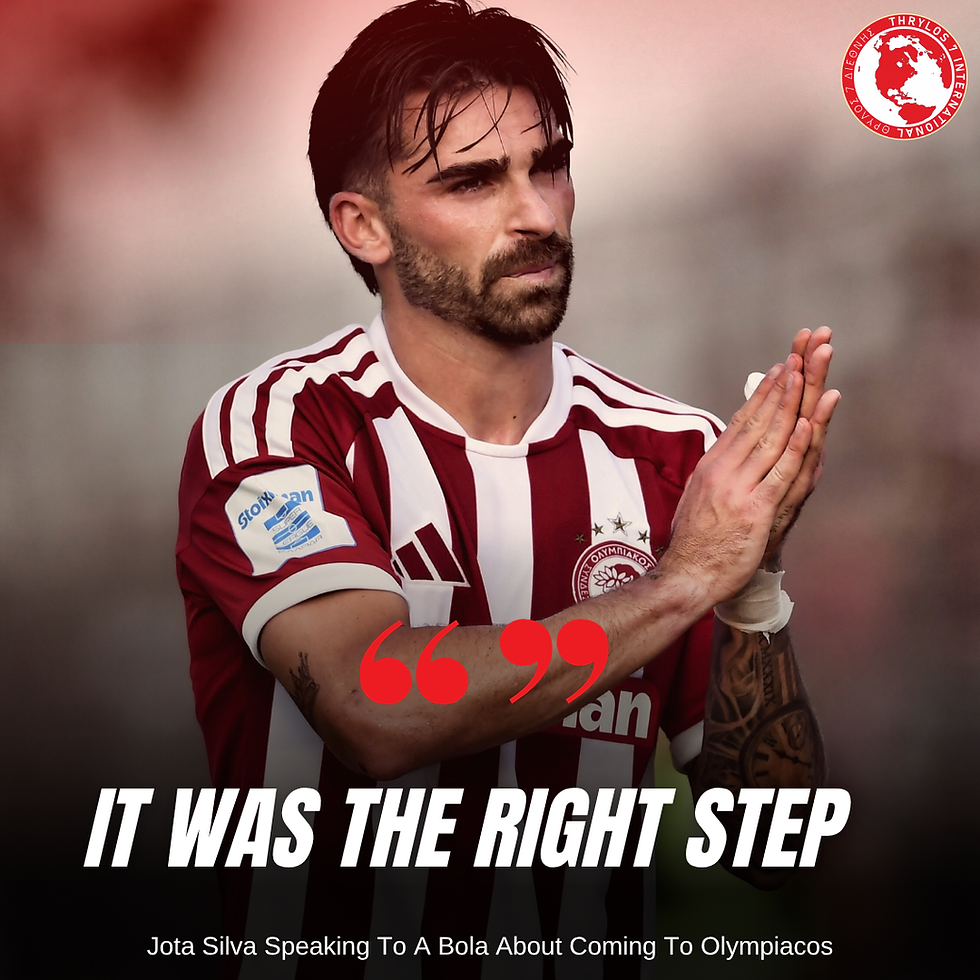
Freuler's remarks arrived on the same day Jota Silva publicly discussed how quickly he has settled at Olympiacos and why he believes the move to Piraeus was the correct step for his career. These are independent comments from players with different backgrounds. Jota emphasized football: playing time, trophies, European competition and the scale of Olympiacos.
Freuler emphasized infrastructure and relocation. Together they describe two halves of the same recruitment proposition. Come here because the football matters. Stay comfortable because the organization works. For Olympiacos, that combination has value.
There is a performance element too
Freuler has already begun translating his experience into useful football. His precise delivery created Roman Yaremchuk's winning goal against Jagiellonia in the Europa League, while his influence in midfield has grown as he has accumulated minutes. That does not happen solely because somebody opened a bank account efficiently but adaptation is cumulative.
Every problem removed from a player's life makes the transition slightly easier. For a midfielder whose game depends on positioning, communication and understanding teammates, accelerating that adaptation is particularly useful.
This is the invisible side of recruitment
Supporters understandably judge a transfer department by names. Who arrived? How much did he cost?
How long is the contract? How many goals will he score? Modern recruitment departments have to think beyond that.
The process continues after the airport photographs. A club can identify the correct player, negotiate the correct fee and agree the correct salary — and still undermine the transfer if the player's integration is poor.
Olympiacos cannot guarantee that every signing succeeds. Nobody can but they can create an environment that removes avoidable reasons for failure.
Freuler's comments suggest that is happening. The Swiss midfielder has spent most of the last decade operating inside Serie A and the Premier League. Six weeks after arriving in Piraeus, what impressed him enough to discuss publicly was not simply the stadium or supporters.
It was how the club looked after the details nobody sees. In modern football, those details are increasingly part of the competitive advantage.


Comments